
How to Search Houghton County Traffic Court Records
Traffic cases here are handled by the 97th District Court, so the record lives in the state court system rather than a county-run citation site. There is no separate county traffic portal. Instead, the Michigan Courts case search reaches district-court files statewide, and a direct shortcut jumps straight to the 97th District docket. Searching by name pulls a party's cases; searching with a case or citation number lands on a single matter.
Before starting, gather the citation number from the ticket, the driver's full name, and a date of birth or date of the stop. Those details cut down on false matches when a common name returns several people. The court file shows whether a ticket is open, paid, dismissed, or set for a hearing.
- Open the Michigan Courts case search at courts.michigan.gov/case-search, or use the 97th District shortcut at micourt.courts.michigan.gov/case-search/court/D97~2.
- Enter the driver's last and first name, or paste the citation or case number if you have it.
- Narrow the results by date of birth or filing date to confirm you have the right person.
- Open the case to read the charge, court date, disposition, and any fine and points assessed.
- Pay the ticket, request a hearing, or ask the clerk for a certified copy of the record.
The Secretary of State keeps the parallel driver file, and its driving-record page explains what that abstract holds and how it differs from a court docket, posted at the Michigan driving record page.
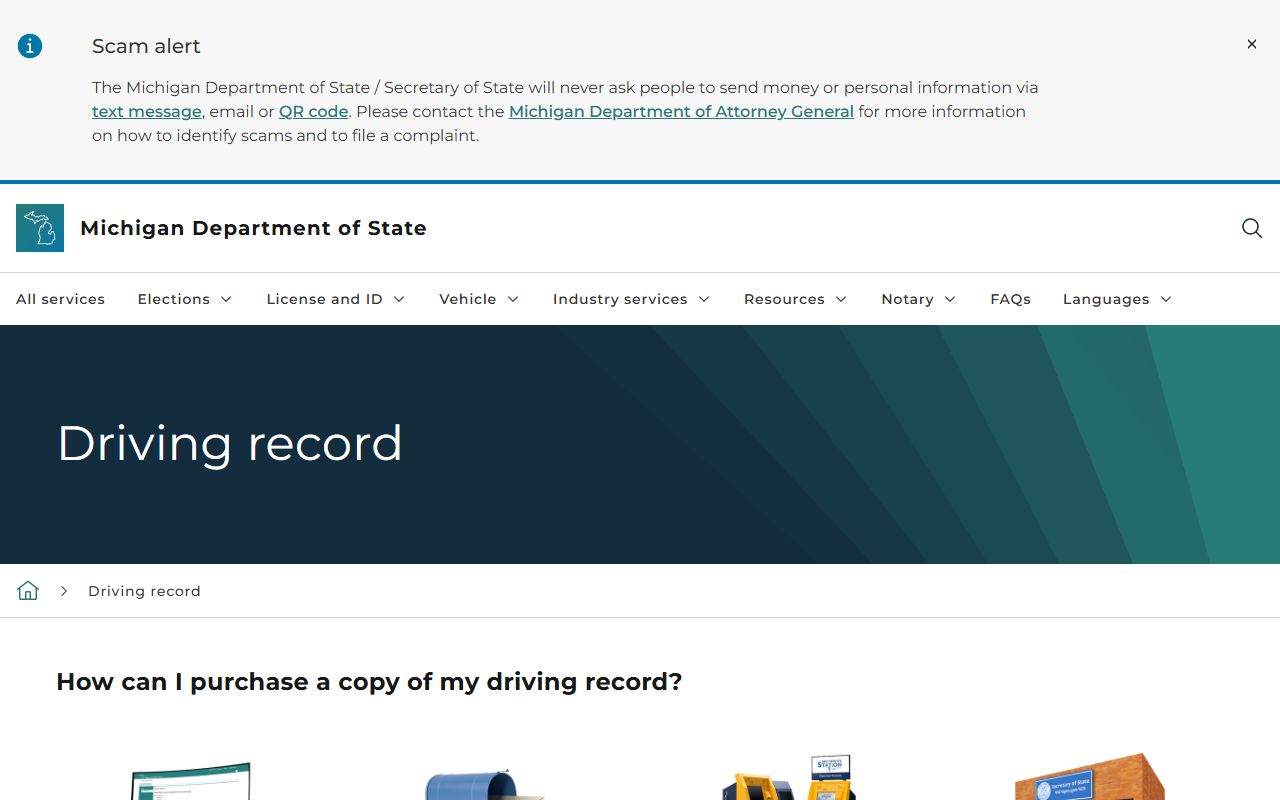
That state page is the starting point for a driver history, while the court search above is the source for the citation file itself.
Which Courts Handle Traffic Cases in Houghton County
Almost every traffic matter in the county funnels into the 97th District Court on the third floor of the Houghton County Courthouse. The court processes citation payments, holds hearings on contested tickets, and keeps the case file. The county page confirms the district court is the payment and processing point for traffic citations, not the sheriff or the clerk's vital-records desk.
More serious driving offenses can climb higher. A charge such as operating while intoxicated or a felony driving offense starts in the district court but can move to the 12th Circuit Court for trial. Routine speeding and equipment tickets stay entirely in district court.
| Court | Traffic Cases Handled | Address |
|---|---|---|
| 97th District Court | Civil infractions, speeding, equipment and non-moving violations, misdemeanor traffic, citation payment | 401 E. Houghton Ave., 3rd Floor, Houghton, MI 49931 |
| 12th Circuit Court | Felony driving offenses and appeals from district-court traffic cases | 401 E. Houghton Ave., 3rd Floor, Houghton, MI 49931 |
| Michigan Secretary of State | Driver record, points totals, and license status (not a court) | Statewide online at michigan.gov/sos |
Because the district and circuit courts share the courthouse, readers can be routed by floor rather than across town. The Secretary of State row is included because drivers often expect the court to fix a license issue that only the state can address.
Types of Houghton County Traffic Cases
Traffic records cover more than speeding. The district court logs civil infractions, misdemeanor traffic offenses, and the various non-moving citations that never reach a courtroom. Each type carries its own fine range and point value, and some route toward criminal treatment.
- Moving violations - Speeding, disobeying a signal, and improper passing draw a fine and points on the driver record.
- Non-moving violations - Parking and standing citations that do not add points but still generate a payable ticket.
- Equipment violations - Defective lights, tires, or registration issues, often correctable once fixed.
- Commercial and CDL violations - Offenses by commercial drivers that carry stricter reporting and appearance rules.
- Misdemeanor traffic - Suspended-license and reckless-driving charges that can carry jail exposure and route toward criminal court.
Sorting a ticket into the right category tells a driver whether points are at stake and whether a court appearance is likely required. The record itself spells out the charge and statute.
What Houghton County Traffic Court Records Show
A district-court traffic record reads like any other case file, built around the citation and its outcome. The entry ties the ticket number to a specific charge, tracks each court date, and records how the matter closed. Fine and point data appear once the case reaches a disposition.
| Field | What It Shows |
|---|---|
| Citation Number | The unique number printed on the ticket that indexes the case |
| Charge / Statute | The offense charged and the Michigan Vehicle Code section behind it |
| Court Date | Scheduled hearing, arraignment, or payment deadline |
| Disposition | How the case ended: paid, responsible, dismissed, or reduced |
| Fine Amount | Total of the fine and court costs assessed |
| Points Assessed | The point value reported to the Secretary of State on conviction |
Points are the field that follows a driver longest, because they move onto the state abstract and can affect insurance. The court file records the points figure, but the running total lives on the driver record.
Searching by Citation Number vs by Name
The state case search takes either a name or a case number, and each has a best use. A citation or case number lands on one file with no guesswork, which is ideal when the ticket is in hand. A name search is the fallback when the paper is lost, but a common surname can return several people, so a date of birth or filing date is needed to confirm the match.
| Search Field | Type | Required | Notes / Format |
|---|---|---|---|
| Last Name | Text | Yes for name search | Pairs with first name to narrow results |
| First Name | Text | No | Optional, reduces common-name matches |
| Case or Citation Number | Text | No | Most precise, lands on a single case |
| Court | Choice | No | Select D97 for the 97th District Court |
| Date of Birth or Filing Date | Date | No | Confirms identity when a name repeats |
For the driver record rather than the court file, the state uses a login-based request instead of a case search. The Secretary of State details who can pull a record and how, on the state driver and vehicle records FAQ.
That FAQ clarifies the privacy rules around driver data, which are stricter than the open court docket.
Houghton County Traffic Fine Schedule
The 97th District Court publishes a fine-and-cost schedule that shows exactly what a speeding ticket costs and how many points it carries. The totals rise with the speed over the limit, and construction-zone offenses cost more for the same speed. The grid below reflects the district-court schedule.
| Violation | Fine and Costs | Points |
|---|---|---|
| 1 to 5 mph over | $140 | 1 point |
| 6 to 10 mph over | $140 | 2 points |
| 11 to 15 mph over | $150 | 3 points |
| 16 to 20 mph over | $165 | 4 points |
| 21 to 25 mph over | $185 | 4 points |
| 26 mph or more over | $205 | 4 points |
| Construction zone, 1 to 10 over | $145 | 3 points |
These figures give a driver a realistic sense of the cost before deciding to pay or contest. A certified copy of a traffic record, if needed for insurance or a hearing, is requested through the district-court clerk.
Paying or Contesting a Houghton County Traffic Ticket
Every citation carries a deadline printed on the ticket, and a driver has to either pay it or answer it by that date. Paying a civil infraction admits responsibility, closes the case, and reports the points to the state. Contesting it sets the matter for a hearing before a magistrate or judge at the 97th District Court, where the driver can argue the charge or seek a reduction.
The plea choices are straightforward. A driver can admit responsibility, deny responsibility and set an informal or formal hearing, or ask for a plea discussion that may lower the offense and its points. Ignoring the deadline is the worst option, because it can lead to added costs and a license hold.
- Read the citation for the response deadline and the assigned court, the 97th District Court.
- To pay, submit the fine to the district court by the deadline in person, by mail, or through the court's payment channel.
- To contest, notify the court by the deadline and request an informal or formal hearing.
- Gather evidence such as photos, witness details, or a clean driving history for a reduction request.
- Appear at the scheduled hearing and follow the court's decision on the fine and points.
Note: Paying a ticket counts as admitting responsibility and puts the points on the driver record, so weigh a hearing before paying if the points matter.
Public Access Laws for Traffic Court Records
Michigan treats court files as public unless a statute or court rule shields them. Traffic case records at the district court are open to inspection under the state court-records rule, while the driver abstract held by the Secretary of State is governed by separate access and privacy limits. The traffic abstract itself is defined in the Michigan Vehicle Code.
Key Statutes:
Michigan Vehicle Code MCL 257.732 - Defines the traffic abstract the court reports to the state and what it must contain.
Michigan FOIA, MCL 15.231 - Establishes the public right to inspect and copy government records, subject to exemptions.
The abstract statute is what links the court case to the state driver record, since a conviction in Houghton County is reported upward. That reporting is why a ticket in one county shows up on a statewide driving history.
The court reports each conviction to the Secretary of State under that abstract rule, and the vehicle-code section behind it is available on the Michigan Legislature site.
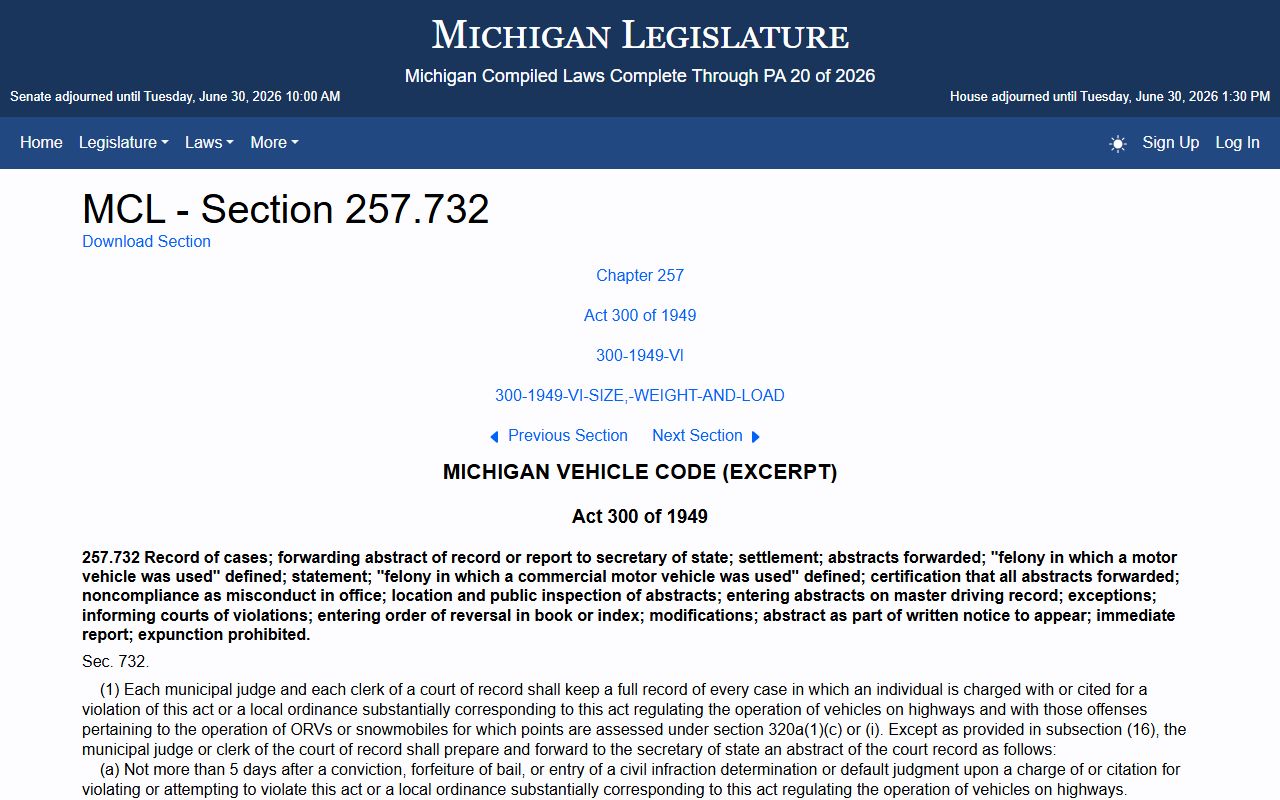
Reading the statute shows why the court file and the driver record stay in sync after a conviction.
Court Traffic Record vs State Driver Record
The single most useful distinction on this topic is that the court file and the driver record are two different documents kept by two different agencies. The 97th District Court holds the case file for a specific citation. The Secretary of State holds the running driver history that lists convictions, points, and license status across every ticket a person has ever received.
| Comparison Point | Court Traffic Record | State Driver Record |
|---|---|---|
| Record Source | 97th District Court, Houghton County | Michigan Secretary of State |
| What It Shows | One citation, its charge, court dates, and disposition | Conviction history, cumulative points, and license status |
| Where to Access | Michigan Courts case search and the D97 shortcut | SOS driving-record portal with a MiLogin account |
| How to Correct | Contact the district-court clerk about a case-file error | File a BDVR-154 or BDVR-153 request or use Road to Restoration |
An online certified driver record costs $16 through the state portal, requires a MiLogin account and identity verification, and stays viewable online for only 7 days. Drivers can also order the abstract by mail using the BDVR-154 or BDVR-153 forms, depending on account type. The Secretary of State forms library holds those request forms at the state forms page.
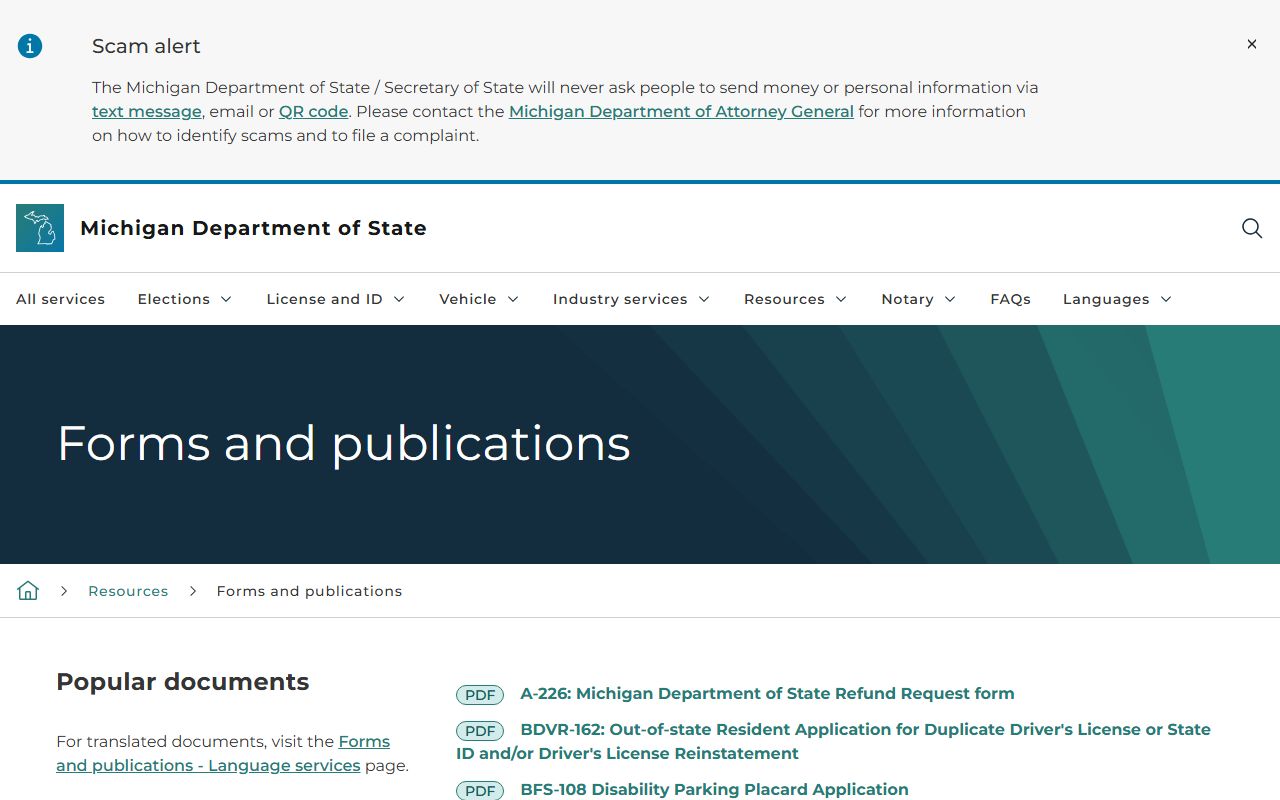
Those mail forms are the route for anyone who cannot or does not want to buy the record online.
CDL and Commercial Driver Records
Commercial drivers face tougher rules on the same tickets. Federal regulations bar the state from masking a commercial driver's convictions, so a CDL holder generally cannot keep a violation off the record through a plea that a regular driver might use. Serious offenses can trigger a disqualification of commercial driving privileges on top of the ordinary fine and points.
Because a conviction reported under the traffic-abstract statute reaches the commercial record too, a CDL holder should think carefully before simply paying a ticket. A short consultation with the district-court clerk or an attorney can clarify how a given charge affects a commercial license before the deadline passes.
The business-services section of the Secretary of State outlines commercial licensing and record rules, available on the state business services page.
That page is the state's hub for commercial-driver and business licensing questions that a traffic ticket can implicate.
DUI and DWI Cases in Houghton County
Impaired-driving cases are not ordinary traffic tickets. An operating-while-intoxicated charge is a criminal matter that opens in the 97th District Court and can move to the 12th Circuit Court, and it carries far heavier consequences than points and a fine. These cases produce a full criminal case file rather than a simple civil infraction.
For how a Houghton County drunk-driving charge is filed, tracked, and resolved, see the Houghton County criminal court records, which follow a criminal case from arraignment through sentencing.
Sealing, Expungement, and License Restoration
Civil-infraction traffic tickets are not criminal convictions, so they generally fall outside Michigan's criminal expungement law. Misdemeanor traffic offenses can sometimes qualify for set-aside under the state expungement statute, though impaired-driving convictions have their own limited rules. The cleaner goal for most drivers is fixing a suspended or revoked license rather than erasing a ticket.
Michigan runs a Road to Restoration program that helps drivers with suspensions understand their path back to a valid license. The Secretary of State describes those clinics and steps on the Road to Restoration page.
For a license lost after serious offenses, the formal restoration process is separate and stricter. The state lays out that hearing-based path on the license restoration page.
Restoration turns on the driver record held by the state, which is why clearing points and resolving the underlying case both matter.